Your website traffic is thriving; the numbers keep soaring, giving you the validation you need. You put in the work and now you are reaping the fruits.
But it’s just numbers -there’s still an unsolved puzzle of converting this traffic into your customers. So you’re just getting started.
How do you do it? What is the best strategy employable for your business to trigger conversions on your website?
High website traffic is only profitable when the conversion rate is equally significant.
This guide will help you understand the importance of conversion rate optimization for your business and how to get started.
What Is Conversion Rate Optimization?
Conversion Rate Optimization refers to the process of growing the number of website visitors that take the action you intend them to.
For instance, signing up to your mailing list, buying your product, or even requesting a service quote. They ‘convert‘ from being a casual stroller on your site to doing something beneficial(to both you and themselves).
To escalate a website’s conversion rate, it’s important to establish what visitors spend time doing in there, as well as what holds them back from pursuing your goals.
Benefits Of CRO
And why is it important to optimize the conversion rate of your website?
- Creates a deeper awareness of your customers: You need hard data about your website visitors to convert them into customers. The conversion rate optimization process deep dives into who your visitors are, their level of interaction with your website, and why they are not converting.
- Reduces bounce rates: Optimizing your website means that there are less bounce rates.
- Increased profit and revenue: Enhanced website conversion rates might not translate to more cost per acquisition(CPA). CRO efforts work by converting onlookers into customers hence increasing the business’s profits and revenue while decreasing the acquisition cost.
- More website traffic: An optimized website signals to search engines like Google about the most relevant content to your target audience. This drives more traffic to your site.
- Utilizes existing assets: It cuts the cost of advertising to new customers. CRO leverages existing tools to convert visitors into customers without additional expenses.
- Data-driven decisions: Conversion rate optimization depends on customer information and data to work. An understanding of the target audience supports optimization and any efforts directed toward enhancing a website’s visibility.
- Better search engine rankings: Optimizing your website does not only attract visitors but also appeals to search engines. CRO enhances your business’s relevance and in turn, search engines rank your site higher on result pages.
- Generates leads: Conversion optimization enhances different aspects of your website that attract valuable leads to your business.
- Boosts trust: Part of optimization includes providing value to your target audience. In the long run, customers will trust you because they are confident of the worth they get from you.
How To Calculate Conversion Rate
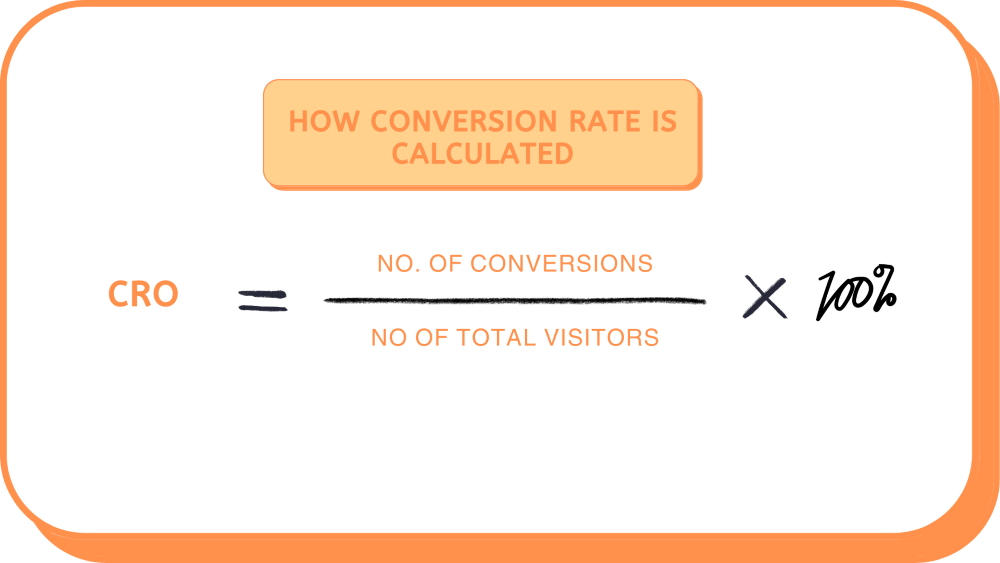
To calculate a website’s conversion rate, divide the number of conversions by the total visitors then multiply that number by 100 percent.
While the formula to calculate the conversion rate is easy, it’s more of the x number of people that convert out of the total number that interacts with your website. It’s not about only having a target number you want to convert.
For instance, you are seeking to increase your email newsletter signups. The goal could be converting 100 people for every 300 visitors you get.
But you may be baffled by whether the numbers you are getting are good. Take a deep dive into how other industry players are performing to establish if your business is performing well.
A research by WordStream indicates a 2.35% average conversion rate across all industries. So anything around or above 2% is good.
Conversion Rate Optimization Strategies
After the success of your SEO strategy, you need to implement CRO and take advantage of the traffic you are getting. And there are plenty of conversion rate optimization techniques you could use for your website.
Let’s break down each one of them;
Personalize Your Audience’s Message
Your audience is the most important factor for conversion rate optimization. As such, your message needs to impress the readers.
It needs to be personalized to address their problems by offering solutions.
Find out their demographics, socioeconomics, and behavior to help customize a message for them.
Additionally, consider the expectations of your readers. How they arrived at your website speaks volumes about their intention. This should help create content that aligns with what they are looking for.
Knowing their search intent will help unravel their motivation, creating suitable content for them.
Use Simple CTAs
CTAs can make or break your conversion rate efforts.
They shouldn’t be complicated, make them as straightforward as possible. Ask yourself, ‘What exactly do I want the reader to do?‘
But while you want them to take certain actions, ensure that the terms you use also offer them some value.
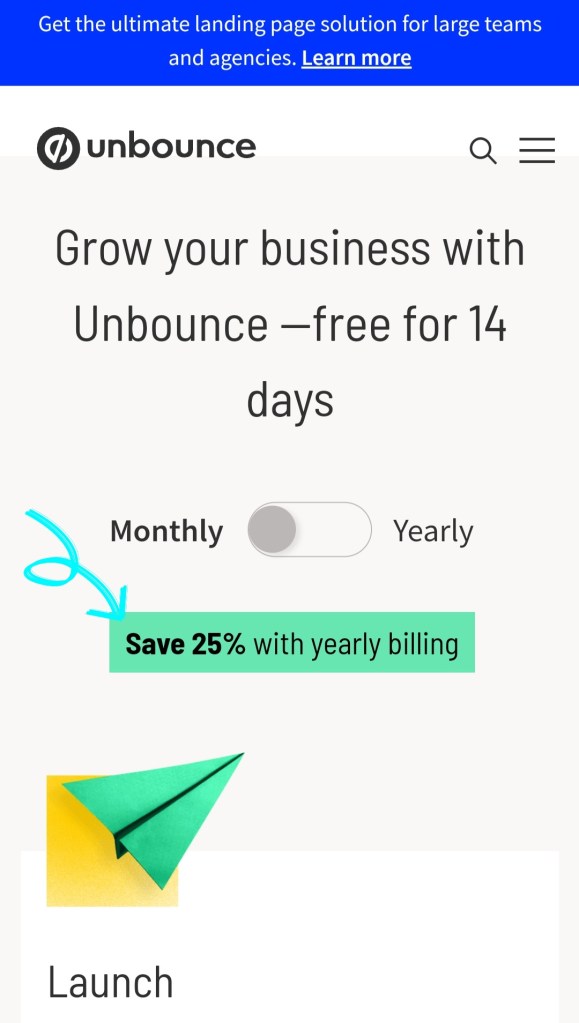
The CTA above by Unbounce tells the user exactly what to do. It also offers a discount, which is meant to persuade customers to take that action.
It’s important to include CTAs on different pages of your website, especially the major ones.
Ensure that they stand out, with a contrasting color from that of your site. Avoid vague terms like ‘download‘ or ‘click here‘.
Instead, add call-to-action buttons such as ‘Get a Quote‘ or ‘Get 15% Off My Course‘. They are more specific about what you need customers to do rather than leave them wondering what the button does.
Use Effective Headlines
Headlines attract readers to your content. This shows how important it is to write optimized headlines that are effective.
Action words coupled with keywords make part of effective headlines and subheadings.
For instance, words such as ‘increase‘ or ‘drive‘ work well. Additionally, use questions that stir your readers’ curiosity.
Headline analyzers help conduct A/B tests and make informed decisions about the best headlines to use.
They provide the nitty-gritty information about what to change about your headlines to make them better. Here is an example of a headline I analyzed – “How to write a winning headline for more clicks”;
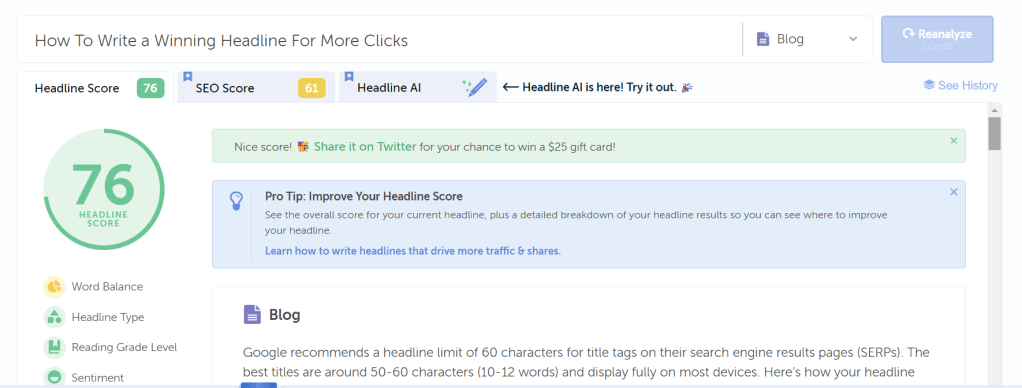

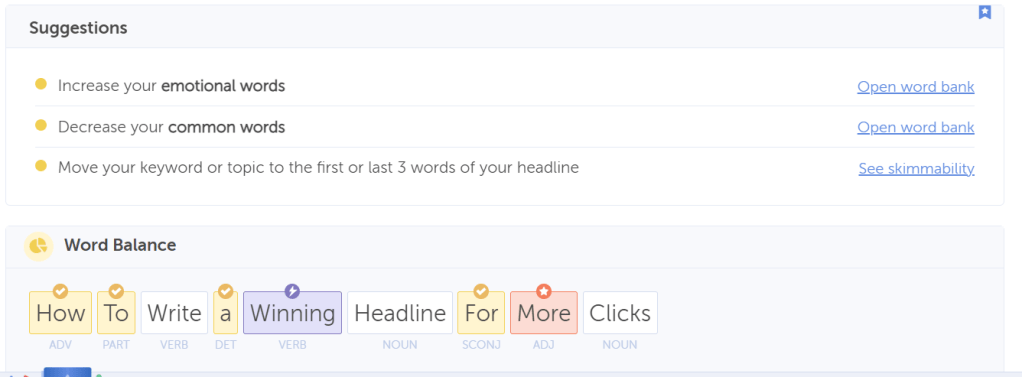
It shows your headline’s score, and how it will show on SERPs. You also get suggestions on how to make the headline better, and more tips on how to make it easily skimmable.

Conduct A/B Tests
A/B tests are indispensable for an effective CRO strategy.
This is evident from the success of companies like Dell that used A/B testing and gained a conversion rate increase of 300%. Bing also used A/B testing on display ads and got a 25% increase in sales.
Whether it is on your CTAs or headlines, A/B testing can be conducted in different parts of the website for improved results.
When implementing A/B testing to your landing pages, ensure that they are short and effective. Forms that are too long might not convert well.
Use other well-performing companies’ CTAs as a benchmark for creating yours.
Include Lead Flows On The Blog
Search engine optimization attracts visitors to your website. These visitors follow a certain conversion path which turns them into buying customers.
These are the lead flows and certain tools help implement them.
Some of the tools to use include pop-ups, chatbots, or slide-in banners. Pop-ups provide options suitable for different business offers, so you have options to experiment with.
Ensure Your Site Speed is Fast
Site speed could be the reason your site bounce rates are high. Your pages should load as fast as they possibly could.
And a high bounce rate means that visitors are not converting – they exit your site to find alternatives that load faster and provide what they need.
The average site load speed for 82% of B2B websites is 5 seconds and below. And the recommended load time for websites is below 3 seconds.
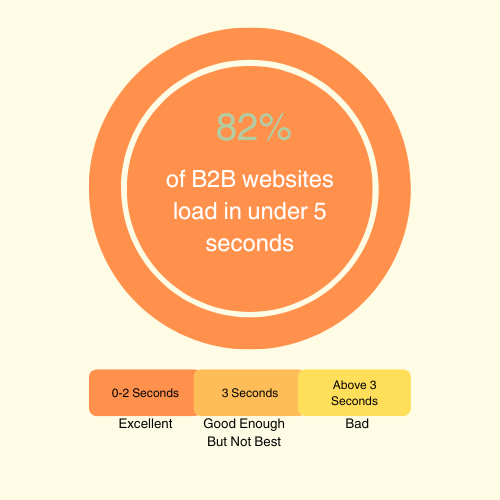
Optimizing for speed ensures that your visitors don’t feel like they’re wasting time looking for answers on your website.
Implement Mobile Responsiveness
The statistics for mobile searches are staggering, accounting for 63% of the overall searches in the U.S. only.
This indicates the importance of optimizing for mobile responsiveness – it significantly impacts your website’s CRO.
However, this doesn’t mean separating mobile and desktop searchers. Oftentimes, a good number of mobile users perform a search but purchase from their desktop.
User experience is crucial regardless of whether they are using mobile or desktop options. Neglecting mobile responsiveness which is often overlooked is only going to hurt your CRO strategy.
But if users get a great experience while navigating your website on their mobile, they will likely stay longer and spend money on your business.
Focus On The Details Above The Fold
Above the fold refers to the region visible to users without scrolling the page.
Focusing on this area encourages the user to take action.

The Fenty Beauty web page above shows a good example of optimizing above the fold.
It is the visible part of the page without scrolling and it has clear copy with a precise call-to-action.
Eliminate On-page Distractions
Some websites are often distracting. If visitors find themselves unable to focus on what they’re looking for, then they are thrown off from the business’s goal to convert.
Get rid of any unnecessary elements that draw the reader’s attention.
Websites should provide focused experiences for their audiences. If customers can stay focused then it’s easier for them to take action and increase your conversion rate.
Your website’s design should be streamlined and clear, leaving the message well-visible.
It might be tempting to include multiple CTAs. However, these might not always be the best. Keep them minimal to avoid overwhelming your customers.
Only focus on the relevant CTAs that will drive conversions.
Ensure Effective Copy
The copy you use should tickle your readers’ interest in your product or offer. You should be able to sell your unique proposition through your copy.
Just like the headlines, tag lines should be short and specific.
Additional techniques you could use to optimize your website for conversions include the following;
- Assess the current checkout funnel to make informed adjustments
- Make the checkout funnel short
- Include client reviews
- Ensure crisp navigation
- Employ 24/7 live chat support to bolster trust
- Establish a return and exchange policy
- Amplify your site’s security
- Gather and analyze customer information for data-driven decision-making
- Leverage surveys to understand what your customers like
Areas to Implement CRO
When implementing your CRO strategies, ensure that you apply the techniques in different areas for optimum results.
In a nutshell, the areas to implement CRO include the following;
Homepage
The homepage creates a first impression for visitors. Additionally, it should be optimized to direct the audience to other valuable pages on the website.
Add features that prompt the customers to take action, from free sign-up buttons to links to product pages.
Landing Page
Landing pages don’t work unless they are optimized. They are created to convert leads into customers.
Remember to create a relevant and unique experience in the 5 major elements of an effective landing page;
- Copy– This should be clear, engaging, and compel users to take action.
- CTA– Should be clear, strong, and straightforward.
- Benefit Statement– Provide an explanation detailing the benefits of your product/service.
- Hero Shot– This is a graphical representation of what you’re offering.
- Trust Indicators– Add trust indicators such as testimonials to your landing page.
Blog
The blog page holds great potential for increasing the conversion rate of your website.
While it provides thoughtful and valuable content for readers, CTAs can be added to offer additional information.
This could be through other blog posts where they can learn more about the topic or an email submission for an exchange with an ebook or other useful freebies.
Pricing Page
The pricing page plays an important role when it comes to conversions. It should be well-designed showing the information needed to make a purchase decision.
Best CRO Tools
To optimize your website for conversions, you will need different tools that provide the assistance required for the process. The following are some of the most popular tools used for CRO.
Research Tools
Content plays a crucial part in your website conversions. Don’t skip in-depth research, especially about what other marketers have been doing right that you could emulate.
- BuzzSumo($199-$999/mo.)
- Land-book(Free)
- SimilarWeb(Starter and Professional plans go for $125 and $333/mo.respectively. Or Team and Enterprise plans which you could contact for pricing)
- Headline Analyzer(Free)
- SubjectLine.com(Free)
- Really Good Emails($9/mo.)
Lead Capture Tools
These tools help to collect, manage, and analyze information about your potential leads. The best part is that they just don’t gather details, but also help identify quality, warm leads who are likely to convert.
Here are a few lead capture tools you could use for your CRO;
Experiment or A/B Testing Tools
These compare two versions of information to assess the one that performs best. From landing page copy to blog copy and other website copy.
- VWO Testing(Free or from $314/mo.)
- Optimizely(Contact for pricing)
- ClickFunnels(From $127 to $208/mo.)
Customer Journey Mapping Tools
Customer journey mapping tools seek to pinpoint the different customer needs and problems in every stage of their journey.
Examples include;
- Miro(Free plan or from $10/mo.)
- WebEngage
- Lucid Visual Collaboration
- Glassbox(Request pricing)
- Totango
Heatmap Tools
They provide a graphical data structure where color is used to show different values. These are used to identify how various parts of the website work and the type of content the audience engages with the most.
- Hotjar(Free or from $32 to $171/mo.)
- Mouseflow(Free plan or from $31 to $399/mo.)
- Clicky(Free or from $9.99/mo. with custom options)
- Smartlook(Free or from $55/mo.)
- Contentsquare
- Crazy Egg
- Heatmap.me(From $89 to $249/mo.)
Landing Page Builders
These provide easy-to-use features for creating highly converting landing pages.
- Unbounce(From $99 to $649/mo.)
- Get Response(From $19 to $999/mo.)
- Active Campaign(From $29 to $259/mo.)
CRO Analytic Tools
These are tools you use to keep track of your website’s performance.
- Google Analytics(Free or contact sales for premium pricing)
- Kissmetrics(Contact for pricing)
- Hubspot Website Grader(Free)
Feedback Tools
To collect feedback from your customers, use these tools;
Overview
While ROI is a key factor for most businesses, CRO plays a major role in achieving the desired numbers.
The more visitors you are able to convert, the closer you get to your business goals. However, depending on the nature of your business, some strategies might not provide the same results as with other businesses.
Most tactics might need you to test a lot, experimenting with different options to find out what works best.
Optimizing your website will utilize your business’s potential increasing your revenue.
 Thee CopySpace