A successful e-commerce site goes through the process of bringing an array of components that work well together to be successful. This article will help create an online store that will stand the test of time.
A study by Statista shows that, in 2022 retail e-commerce sales were estimated to exceed 5.7 trillion U.S. dollars worldwide and the signs show it will only improve. However, starting the journey as an entrepreneur in the e-commerce sector has its shortcomings, but as Plato once said“The beginning is the most important part of the work.” In this article, we will offer a comprehensive guide on how to kickstart the journey towards an e-commerce empire.
You will learn how to build an e-commerce store from scratch. We will have a look at some of the important details like planning, content creation, marketing, cybersecurity, etc. In the end, you will be equipped with the knowledge to not only build the e-commerce store but also build trust with the customers.
The following are the nitty-gritty that are needed to build, operate, and bring success to any business getting into the e-commerce space.
Planning Phase
Before diving into the technical aspects of building an e-commerce store, it’s essential to lay a solid foundation through careful planning.
To start, there is a need for a firm foundation. The entire process requires proper planning to help streamline things. There are several things to take note of, from the market, the product being sold, and who to sell it to. This will help strategize how to optimize the content for search engines and consumers.
Further, here are some important factors to take note of during the planning process;
Market Research and Niche Selection
The market is why any business exists and succeeds. Understanding what the market needs are will make it easy to direct energy in the right areas. A clear review of what previously worked and current trends will be a plus at this stage.
Analyze what the competitors are doing and the opportunities available to curve up a niche. This is where to segment the market and cater to their preferences and needs.
Defining Goals and Objectives
Objectives and targets are crucial. Ensure to answer the question; “What is the desired outcome for having an ecommerce store?”
There might be plenty of reasons, like boosting the revenue stream, broadening the client base, expanding the market, or being at par with other industry players. Everyone’s goals are unique, try and figure them out.
While setting your objectives, deliberate on the best framework for your eCommerce store. Some of the most popular ones include;
Shopify

Shopify is an internet business platform that caters to people and organizations to make and oversee online stores. Shopify helps accomplish various things for the business that might include marketing, secure payments, free website designs, and product shipping.
Pros
- User-Friendly
- Broad Application Store
- Wonderful Themes
- Dependable Hosting
- Installment Options
- Highly Responsiveness
- Scalability
Cons
- Exchange Fees
- Costs Add Up
- Restricted Free Themes
- Stage Lock-In
- High-level Customization
Pricing
There are three pricing options on Shopify;
- Basic: $32/month Ideal for independent ventures.
- Shopify: $92/month Offers an option of.
- Advanced Shopify:$399/month Appropriate for scaling organizations.
WooCommerce
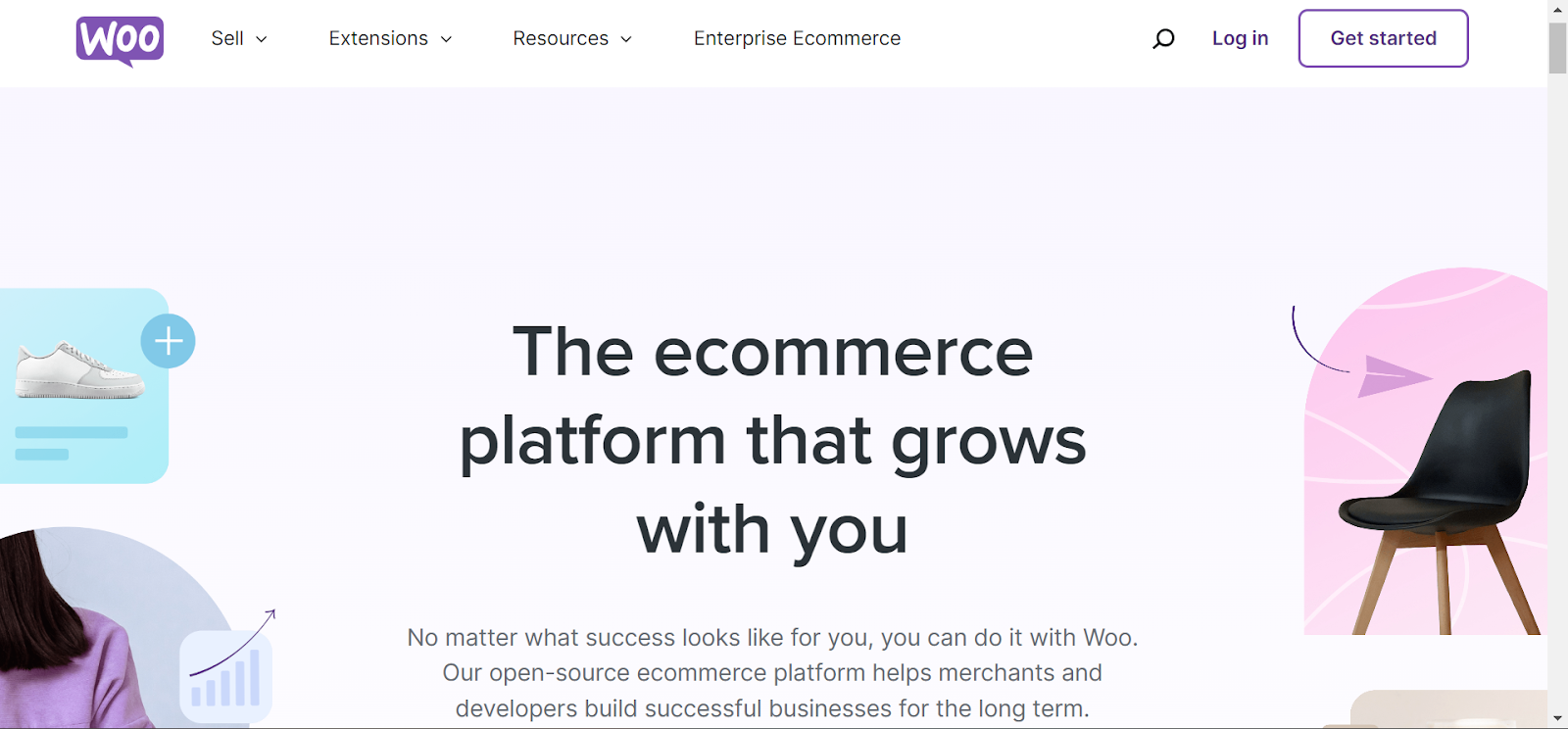
WooCommerce is a popular web-based business module for WordPress that empowers clients to make and oversee online stores. Its simple outlook on building websites has made it one of the leading e-commerce platforms. As of 2023 both WooCommerce and Shopify had among the largest market shares in the e-commerce sector.
Pros
- Coordination with WordPress
- Customization
- Scalability
- Enormous Community
- Flexibility
- SEO-Friendly
- Great security
Cons
- Complexity in setting up
- Extra cost for addons
- Ongoing maintenance
- Performance issues when customizing
Pricing
For online entrepreneurs to enjoy the benefits of their WooCommerce store, they have to pay any of the following packages;
- Basic $6.95/month.
- Mid-range $8.95/month.
- Advanced $12.95/month.
PrestaShop

PrestaShop is an open-source internet business platform utilized for making and overseeing web stores. Prestashop has over 300,000 brands running their business through their online stores. The growth of the platform’s popularity has risen from its ability to support the growth of online stores.
Pros
- Open-Source
- Customizability
- Multi-language and Multi-cash Support
- Dynamic Community
- SEO-Friendly
Cons
- Complex Setup
- Resource-Intensive
- Restricted Local Features
- Extra setup for security
Pricing
To set up an online store on Prestashop the prices might fall in the following range;
- Domain: $10 to $15/annually.
- SSL/TLS: $5 to $1000.
- Server: $5 to $5,000/month.
The pricing is directly affected by the needs of the owner.
Budget and Resource Allocation
Establishing the cost of building the e-commerce store, and maintaining and updating it will be a huge bonus in the planning stage. Settle a figure that will work to achieve the targets and spread out the resources wisely.
Before determining the budget, let expenses relating to web development, maintenance, and marketing guide the decision-making process.
Website Development Phase
With a detailed plan in place, the technical part follows, and it is time to start developing the website. There are two paths to follow, either work with a developer or do it on your own.
A competent developer is extremely important for obvious reasons. The developer can be in-house or can be an external agency. Whichever route is chosen, make sure the developer is familiar with multiple ecommerce platforms, to help design a platform in tune with the vision.
By choosing an agency, make sure to have access to the content management system to be able to independently update the website.
The agency will help in doing the following:
- Picking the right tech stack that is up to date, has great capacity for scalability, and can be used by the business owner
- Creating a well-designed user interface that appeals to the consumers.
- Make sure the interface is user-friendly, to help in operating with ease.
- Include several important features that will smooth out the necessary process of interacting with products.
- Build a highly responsive system that can be integrated with any device, whether phone or computer.
- Incorporate several payment gateways that will make purchases smoother. The more they are the better the users experience.
Alternatively, an individual can work on it by themselves. There is a common misconception that building websites is too much hassle, but it can also be lots of fun and give complete control of a person’s online business.
It is estimated that the e-commerce software application market generated revenue around 5.1 U.S. dollars in 2018 and the growth is estimated to reach 7.4 billion U.S. dollars in 2023.
With this rate of growth and revenue generation, there is a high probability of finding one that suits one’s needs.
Choosing Domain and Hosting Options
For there to be a functional website, a domain, and a hosting service need to work together. The domain is where users will interact with the website while the hosting service is where the website is stored.
Let’s delve into both of them and tips on how to choose the best.
Selecting a Hosting Provider
The provider chosen will greatly affect the overall performance of the e-commerce store. It will affect the speed, uptime, and a significant portion of the user experience.
Take time to figure out what the best prover available is. Here are the steps to follow;
- Know the website needs.
- Mingle with differing hosting platforms.
- Check on the important key features.
- Figure out the most reliable host.
- Merge the cost of hosting with the estimated budget and see if it is feasible.
Finally, the capability of the provider to handle immense traffic and be scalable is important in making the final decision. To become an empire, growth is inevitable.
Some of the most popular hosting providers include the following:
Bluehost
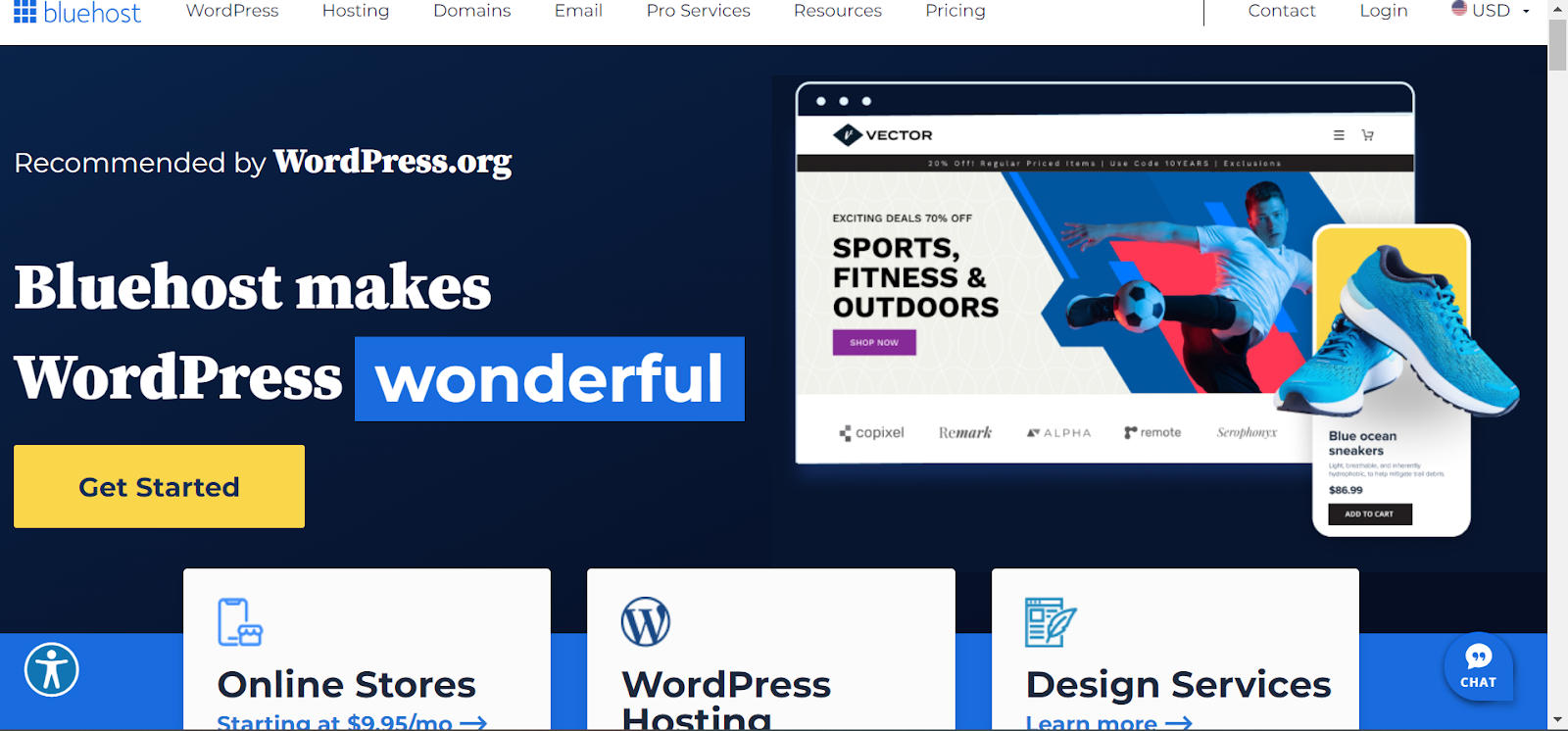
Bluehost is a web facilitator known for its unwavering quality and easy-to-use administrations. They offer a scope of facilitating choices, including shared, VPS, and devoted facilitating, making it an incredible decision for the two fledglings and experienced site proprietors.
Pros
- Simple interface, great for amateurs.
- Great speeds in execution.
- Simple WordPress installation.
- Client assistance.
Cons
- High renewal fees.
- Restricted features on lower-level plans.
Pricing
- Basic: Begins at $2.95/month (renewal at $7.99/month).
- Plus: Begins at $5.45/month (renewal at $10.99/month).
- Decision In addition to: Begins at $5.45/month (renewal at $14.99/month).
SiteGround

SiteGround is a legitimate web-facilitating supplier known for its excellent client care and quick site execution. They offer different facilitating arrangements, including shared, cloud, and WordPress, making them a number one for bloggers and organizations.
Pros
- Great client support
- Reliable uptime
- Overseen WordPress facilitating accessibility
Cons
- Restoration costs are higher
- Restricted capacity on lower-level plans
Pricing
- StartUp: Begins at $3.99/month (renewal at $14.99/month).
- GrowBig: Begins at $6.69/month (renewal at $24.99/month).
- GoGeek: Begins at $10.69/month (renewal at $39.99/month).
HostGator

HostGator is a deeply grounded web-facilitating organization with an extensive variety of facilitating plans reasonable for various necessities. They offer reasonable shared facilitating, strong VPS facilitating, and devoted server choices, making it available to different clients.
Pros
- With great execution.
- 45-day unconditional promise.
- Unlimited data transmission on all plans.
- Client support.
Cons
- Reestablishment costs are higher.
- Support reaction times can differ.
Pricing
- Hatchling Plan: Begins at $2.75/month (renewal at $6.95/month).
- Child Plan: Begins at $3.50/month (renewal at $9.95/month).
- Business Plan: Begins at $6.25/month (renewal at $14.95/month).
A2 Hosting

A2 Hosting is perceived for its fast facilitating administrations and improved arrangements. They spend significant time in offering turbocharged facilitating with strong state drives (SSD) and have major areas of strength for speed and execution for sites and applications.
Pros
- Rapid facilitation with strong execution
- Free site relocation
- Selection of server farm areas
- Any day money back policy
Cons
- Renewal charges are higher
- Restricted capacity on lower-level plans
Pricing
- Startup: Begins at $2.99/month (renewal at $8.99/month)
- Drive: Begins at $5.99/month (renewal at $11.99/month)
- Turbo max: Begins at $9.99/month (renewal at $19.99/month)
Choosing a Domain Name
Choosing a domain name can be compared to picking a store’s address. It should be done strategically and with the consumers in mind.
Some of the factors to help the website garner more traffic are;
- Ensuring it is short and easy to type
- Using keywords
- Ensuring it is catchy
- It shouldn’t have numbers
- Ensuring it resonates with the consumers
Domain names can be bought from domain sellers, which are organizations certified to enlist and oversee domain names. They offer different domain-related services, including space enlistment, executives, and frequent web facilitating.
Popular domain sellers are;
GoDaddy
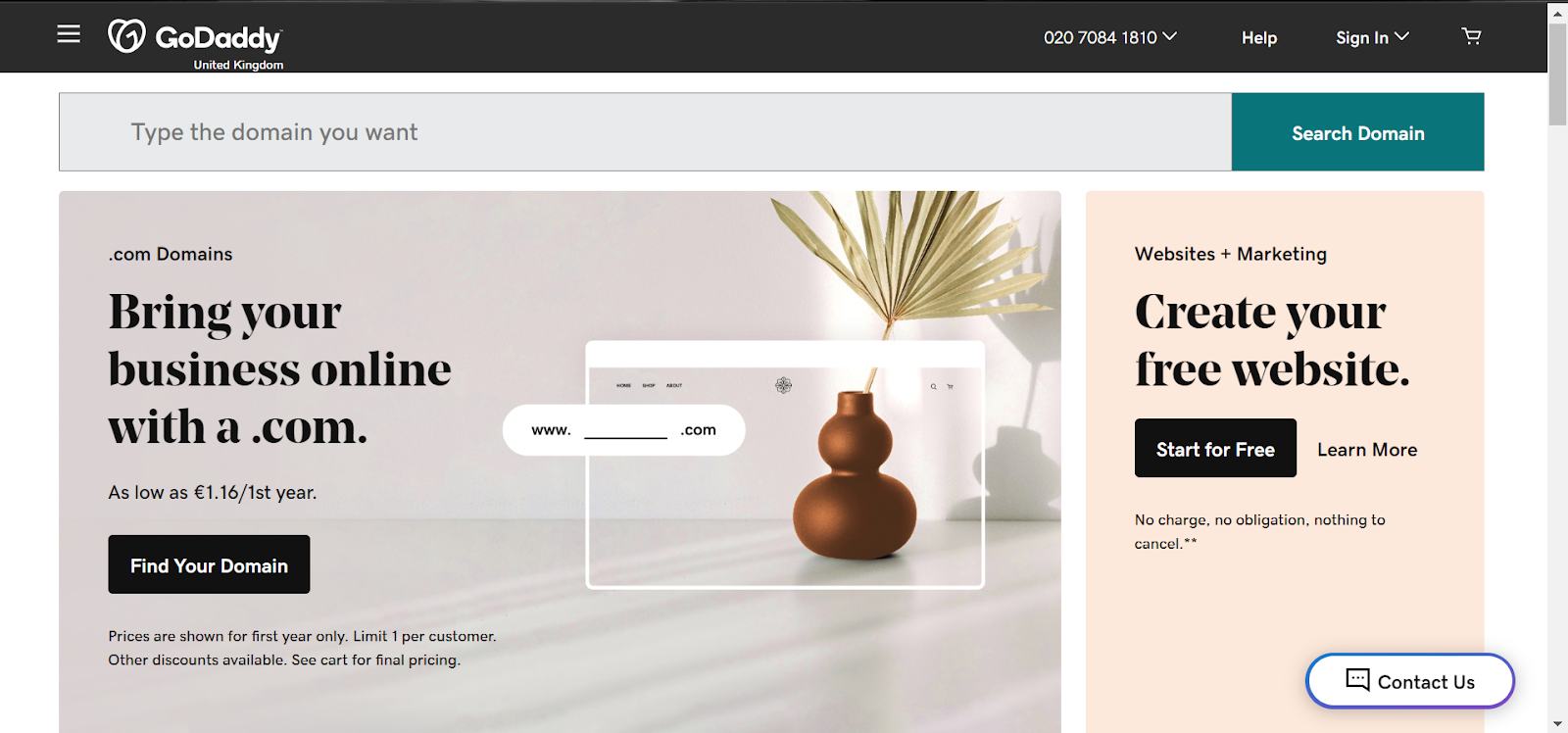
One of the biggest and most notable domain sellers centers around the world. They offer an extensive variety of space expansions, facilitating, and site-building administrations.
Pros
- Broad domain choice.
- Easy to use interface.
- Extra administrations like facilitating and web designers.
Cons
- Valuing can be higher contrasted with certain contenders.
- Forceful upselling during checkout.
Pricing
Godaddy has 3 categories of pricing;
- Basic $16.99/month
- Standard $26.99/month
- Premium $29.99/month
Sedo

A domain seller to purchasers and vendors of domain names. They additionally offer domain adaptation administrations. Sedo is a famous domain commercial center where clients can purchase, sell, and park domain names. It helps to find and obtain the ideal domain name for their internet-based presence.
Pros
- Enormous stock of domain names available to be purchased.
- The choice to partake in area barters.
- Area evaluation and business administration.
Cons
- Costs for premium areas can be high.
- Expenses for area deals and sales.
Pricing
Sedo being a platform for domain buying and selling, the pricing translates to commissions paid after a sale.
The commission percentages vary.
- 10% through Sedo Marketplace.
- 15% through Sedo Marketplace from a market offer list.
- 20% through SedoMLS Network
Namecheap
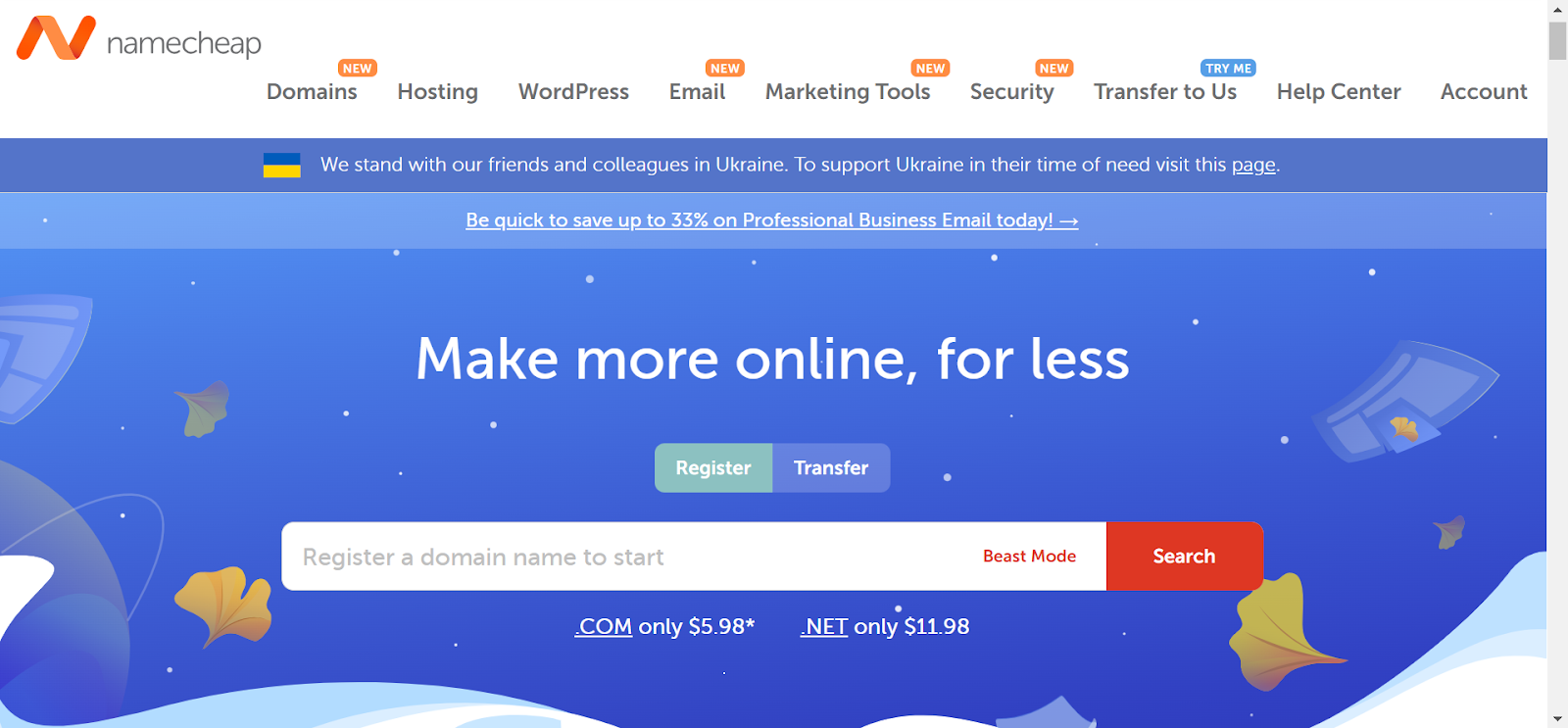
A popular domain seller, known for cutthroat valuing and extra administrations like facilitating and SSL endorsements. It is a domain recorder and facilitating supplier known for its reasonable domain enrollment, administration, and dependable facilitating arrangements.
Pros
- Reasonable domain enlistment and recharging rates.
- Easy to use interface.
- Free security insurance.
Cons
- Less extra administrations contrasted with certain contenders.
- Client service can fluctuate in quality.
Pricing
The price changes according to the name chosen
- .com registration $10.28, renewal $15.88
- .net registration $11.98, renewal $14.98
- .org registration $7.48, renewal $14.98
- .io registration $39.98, renewal $44.98
Hover
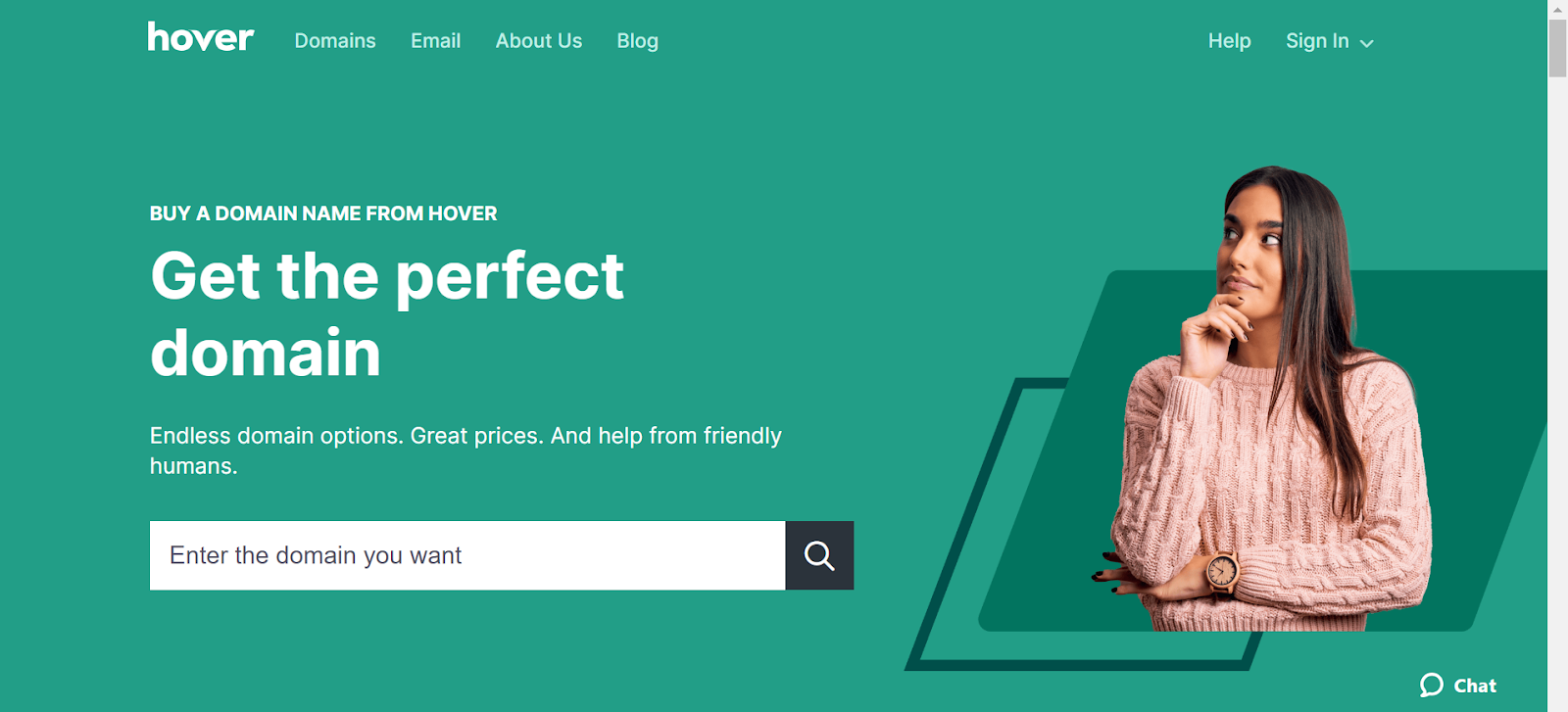
A domain seller with an emphasis on straightforwardness and phenomenal client care. They offer domain enlistment and executive administrations. They give a clean and easy-to-use interface for domain enlistment, making it simple for people and organizations to get their internet-based persona.
Pros
- Straightforward evaluation with no upselling.
- Easy to use interface.
- Extraordinary client care.
Cons
- Less extra administrations contrasted with certain recorders.
- Space estimating may not be the least expensive all the time.
Pricing
The price changes according to the name chosen;
- .site $4.28
- .inc $349.99
- .org $4.99
- .shop $4.99
While picking where to purchase a domain name, consider factors like valuing, accessible domain expansions, client care, and extra administration costs.
Setting Up Domain and Hosting
There are two ways to do it, either get the domain and hosting from one provider or separately. By getting them separately, configuration will be undertaken to ensure they work together seamlessly.
It might need a lot of attention to get the DNS settings and the hosting environment ready for web development.
By using them as a package the process becomes easier. Some platforms even suggest URLs and domain names for the business after answering a brief questionnaire.
Here are some factors to consider for a hosting service that also offers domain services;
- Platform Ownership
- You need to make sure that you own the content that you are feeding into the platform.
- Cost
- Looking for the cheapest option is not always the goal, but you need to cross-check if what the platform is charging and what services it offers are worth investing in. It is best to settle for a website that can meet your needs and help you scale your business.
- Integrations
- It should be easy for the platform to interact with data from other sources.
- Themes
- Your customers should get a good feel of the website without any hassle. The platform needs to offer several theme options that will make the products stand out and appeal to the consumer
- Scalability
- The platform needs to be able to withstand a heavy workload. As your business grows you expect your website to gain more traffic.
- Ease of Use
- The system put in place should be easy for you to manage product data with a lot of ease. Most platforms make it easy for you to work with them without prior coding knowledge.
- Security
- Business information should be safely guarded. It is paramount for the platform to have proper security measures in place.
- Payment Option
- The end goal of an e-commerce website is to get profit. A good platform requires more than one payment gateway that allows consumers to make purchases efficiently.
Content and Product Management

How and what is posted on the site builds or kills it. For any e-commerce website, the products are the most important. The process of adding products can either be done one by one or in bulk with the help of a third-party tool. While adding products make sure to have the price, description, and name well placed. This can make or break your online presence.
Points to note when adding content include:
- Post good-quality images that are paired with compelling descriptions.
- Inventory management. To avoid out-of-stock plastered all over the site, take regular stock checks to anticipate and restock fast-moving products.
- Create collections. Once the products are in go ahead and categorize them and make a collection to make it easy for the customers when searching for what they need.
- Implement SEO and content optimization. SEO strategies are crucial in pushing for organic traffic to the store. Furthermore, pairing these strategies with content optimization makes the store easily accessible.
The E-commerce penetration of the US market has been estimated to continuously increase between 2023 and 2027 by a total of 2.7 percentage points following a ninth consecutive year. This can be tied to how active e-commerce stores present content to consumers and services.
Security

Having a store online creates an avenue for potential threats and ensuring its security is important. According to Statista, between September and November 2022, United States organizations experienced 65 percent of the world’s cyber attacks worldwide, making it the most cyber-attacked country.
With that data report, it is prudent to have a security system in place. It not only safeguards the store’s integrity but also protects customers’ data like bank accounts and physical addresses.
The best ways of achieving a secure online store is by;
Implementing an SSL Certificate
Data encryption is one way of making sure that the data is always safe even when accessed wrongfully. Security Socket Layer(SSL) certificates are put in place to encrypt the interaction between the server and the web browser. A secure website will give consumers peace of mind when scrolling.
Ensuring Secure Payment Processing
Examine all methods of payment that are available and choose the most secure. This will secure transactions and prevent any loss for both the business and consumers. E-commerce payment methods should be encrypted, and have two-step authentication and fraud detection.
Regular Security Audits
Cybercriminals are always poking holes in systems waiting for an opportunity to strike.
A proactive way to counter this is by conducting regular audits of the site. If there is an update for the tech stack in charge of money transfer available, it is advisable to get it.
Testing Phase

There is a need to conduct rigorous testing before the e-commerce store is ready for public use. It is important to check if all the features are working, the UX interface is excellent and everything works flawlessly under various conditions.
Functional Testing
As the name suggests it is all about testing the functionality of all features on the site. The most important areas to test will include;
- Product search
- Account creations for users
- Shopping cart functionality
- Login functionality
The test helps pinpoint the issues that would impede the experience of users, killing the potential of the site at its early stage.
Performance Testing
The question to answer after this test is whether the site can handle different load sizes. Simulate high traffic to see if it will drag or maintain optimum speeds. The site must be able to deal with high traffic without crashing or lagging. This is to anticipate the increased number of users that will come with the site’s success.
Usability Testing
By engaging a focus group that represents the target audience, usability can be examined. Let the testers interact with the site and provide feedback. It helps give an unbiased view of what functionalities are working and what needs changing.
In addition, it can present insights on things that had been overlooked like a confusing layout or a barrier to making payment. The entire process is geared towards refining and polishing the user interface.
Cross-browser and Device Compatibility Testing
Different web browsers have different layouts and respond differently to various websites. Similarly, this is the case for devices. Whether it is a smartphone, tablet, or desktop, the site needs to integrate with whatever device it appears on.
This test helps to find the issue with the site’s layout. The end goal is to maintain consistency across all platforms.
Launch

At this point, the website has taken shape and it is almost ready to go live. But before publishing it there are a few steps that are to be followed:
- Final Checks and Debugging. It is better to be safe than sorry. Go through all the systems to ensure that the website is good.
- Announcing the Launch. The last step is to make the website visible to the customers. Social media can be used to promote the site. Create a social media account for the site, post the products, and engage with the followers. Furthermore, use social media advertising to reach more potential customers and direct them to the site.
Monitoring Website Traffic
Once the site has been launched, it is standard practice to check both the website traffic and user interaction. Tweaks can be made based on the consumers’ behavior, hence keenness with their interactions is key.
By registering the website with Google Analytics, track consumer traffic and understand how they interact with the store. A clear picture is drawn relating to aspects like conversation rates, geolocation, device information, and the number of users.
Marketing and Promotion
There is no easy way to reach customers and get them to make purchases. Consolidating different marketing efforts and having a steady marketing strategy ensures that the right customers are targeted. Better yet, significantly reduces the cart abandonment rate.
Once the site is up and running, marketing strategies such as SEO, email marketing, paid advertising, content marketing, and social media marketing are applied.
Search Engine Optimization
Search Engine Optimization (SEO) is crucial for your site’s visibility. For customers to find the site, it should be optimized for different search engines. Searchers are likely to find what they need on the first page of the search engine results.
That means the higher the site ranks, the higher the probability of getting noticed. In the long run, visitors will make purchases if the site ranks for the right keywords.
Content Marketing
Content Marketing perfectly backs all SEO efforts. Ranking high is one thing, but answering searchers’ queries is another. It takes 15 seconds for a website visitor to either find what they are looking for or leave the website if otherwise.
Including high-quality product images and video guides to further explain how they work goes a long way in improving the overall marketing success. Additionally, blog posts that could be of interest to the reader are a great way to boost e-commerce marketing efforts.
Social Media Marketing
Social Media Marketing (SMM) has become massive throughout the past years. If done properly, it is one of the fastest ways to grow an e-commerce website. Social media platforms are an effective way to direct new visitors to your website.
From TikTok to Instagram, Twitter, Facebook, LinkedIn, Pinterest, and YouTube. These are efficient channels to achieve success with any social media campaign.
Email Marketing
Email Marketing falls at the frontline when it comes to customized content. It’s also a great way of increasing leads and collecting feedback that could be used to improve the marketing strategy.
Entrepreneurs can connect with their audiences while sending campaigns to them. Email Marketing has also served as one of the best ways to direct website traffic. Eventually, these leads convert to paying customers.
Paid Advertising
Paid Advertising targets specific audiences. Modifying campaigns to specific demographics within specific locations is a surefire way of driving traffic to the website. While SEO is an organic way of increasing a website’s visibility, paid advertising will also get the job done.
PPC ads are often highly targeted with fast results. Different targeting options make PPC highly efficient for promoting e-commerce websites.
Maintenance and Updates

Proper maintenance and regular updates on the website play a key role in keeping it healthy. The below practices are essential;
- Security updates need to be done routinely. Security softwares run out of date, leaving your e-commerce website prone to cyber-attacks. This also improves compatibility with other new system upgrades available.
- Regular backups beef up data security and protect against different failures. Data backup aids the recovery of important data. Instead of spending largely on replacements for destroyed assets, data backup solutions reduce this cost. What’s more, by securing and making data accessible, new business owners can be compliant with government regulations.
- Customer service programs provide value to their customers. Customers feel treated well and their issues are addressed promptly. This makes them want to stick around a little bit longer. From the business’s end, this is customer retention which is a huge plus.
- Companies should be able to keep track of their inventory. Better yet, inventory management systems incorporated into the e-commerce site automate the process.
Market Trends
Market trends usually significantly impact the final decision for most entrepreneurs. That’s why every online store is always on the lookout for new trends. Leveraging new market trends to develop new products and attract potential customers tactic employed by most entrepreneurs.
This gives a competitive edge. Market trends also help to identify different customer needs hence developing the right products.
Final Word
Building an e-commerce website from scratch doesn’t have to be a pain. With these steps, you have the basic information on how to establish your e-commerce website that will help you boost both your income and how you interact with customers. The key to success with any e-commerce site is to keep learning, experimenting, and remaining consistent.
 Thee CopySpace